Bank of Canada Holds Rate at 2.25% — June 10, 2026

Ose Ainabe • 10 June 2026

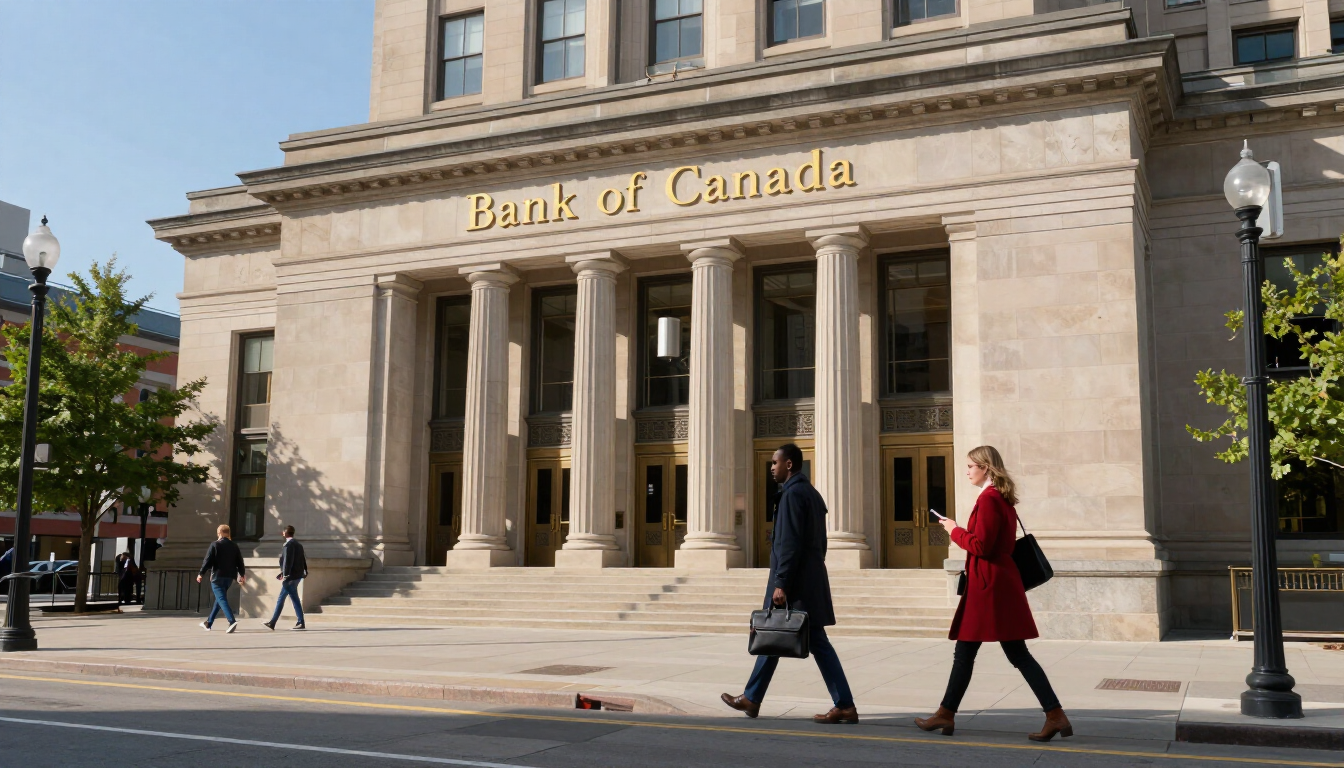
The Bank of Canada announced today that it is maintaining its target for the overnight rate at 2.25%, with the Bank Rate at 2.5% and the deposit rate at 2.20%. For Canadian homeowners, buyers, and anyone with a mortgage on the horizon — here's what you need to know.

What the Bank of Canada Said

The Global Picture

The conflict in the Middle East is now in its fourth month. Higher energy prices and disruptions to global supply chains continue to weigh on economic growth worldwide and push inflation higher. At the same time, U.S. trade policy uncertainty remains elevated, with new tariff proposals continuing to create uncertainty for Canadian businesses and exporters.

In the U.S., economic growth remains solid, supported by consumer spending and AI-related investment. In the euro area, growth is subdued. China continues to benefit from strong exports. Canadian financial conditions have loosened somewhat since the April Monetary Policy Report — global equity markets have been buoyant, though bond yields remain volatile. The Canadian dollar has weakened against the U.S. dollar and other currencies.

The Canadian Economy

Canada's GDP edged down by 0.1% in the first quarter — weaker than the Bank had expected. Consumer spending grew 1.4%, but government spending unexpectedly declined. Housing activity also fell, business investment remained weak, exports dropped, and imports rose strongly as inventories were rebuilt.

On the jobs front, employment was up in May — but looking past monthly swings, employment in Canada has been little changed since the start of the year. The unemployment rate continues to hover in the 6.5%–7% range, with the most recent reading at 6.6% in May.

The good news: the Bank expects growth to resume in the second quarter. But even with a rebound, the economy is expected to remain in excess supply for the near term.

Inflation

CPI inflation rose to 2.8% in April, as expected. The increase reflects higher energy prices and the impact of the consumer carbon tax elimination falling out of the 12-month calculation. Importantly, there has been limited evidence so far of that energy price increase spreading broadly into other consumer prices.

Core inflation measures have moved down to around 2%, and the share of CPI components growing above 3% is now close to its historical average — both positive signs. Food price inflation moderated but remains high. Shelter inflation continued to slow.

With global oil prices still roughly $10 per barrel above the Bank's April assumptions, total inflation is expected to hover around 3% in the near term before gradually easing back toward 2%.

Why the Bank Held

The Bank's Governing Council chose to hold at 2.25%, citing weak economic activity in Canada, persistent U.S. trade policy uncertainty, and the ongoing conflict in the Middle East. The Bank is continuing to "look through" the war's near-term impact on headline inflation — but has made clear it will not allow higher energy prices to become persistent inflation. The Bank stands ready to respond as the outlook evolves.

What This Means for Mortgage Holders and Buyers

A rate hold means no immediate change to variable-rate mortgage payments or home equity lines of credit (HELOCs) tied to the prime rate. The prime rate remains at 4.45%.

The broader message from today's decision is one of patience and watchfulness. Canada's economy is soft, inflation is being driven largely by energy prices rather than broad demand, and the Bank is in a careful holding pattern. This environment doesn't signal imminent rate hikes — but it also doesn't yet open the door to cuts.

For anyone renewing a mortgage, considering a purchase, or weighing fixed vs. variable options, the decisions you make over the next few months matter. A thoughtful conversation with your mortgage professional now can make a real difference.

The next scheduled rate announcement is July 15, 2026 .

As always, every borrower's situation is unique. If you have questions about how today's decision affects your mortgage — reach out. I'm here to help you make sense of it.

Information sourced from the Bank of Canada's official press release dated June 10, 2026.

Ose Ainabe

Mortgage & Real Estate Agent

GET STARTED
by Ose Ainabe 9 June 2026
Thinking About Buying a Home? Here’s What to Know Before You Start Whether you're buying your very first home or preparing for your next move, the process can feel overwhelming—especially with so many unknowns. But it doesn’t have to be. With the right guidance and preparation, you can approach your home purchase with clarity and confidence. This article will walk you through a high-level overview of what lenders look for and what you’ll need to consider in the early stages of buying a home. Once you’re ready to move forward with a pre-approval, we’ll dive into the details together. 1. Are You Credit-Ready? One of the first things a lender will evaluate is your credit history. Your credit profile helps determine your risk level—and whether you're likely to repay your mortgage as agreed. To be considered “established,” you’ll need: At least two active credit accounts (like credit cards, loans, or lines of credit) Each with a minimum limit of $2,500 Reporting for at least two years Just as important: your repayment history. Make all your payments on time, every time. A missed payment won’t usually impact your credit unless you’re 30 days or more past due—but even one slip can lower your score. 2. Is Your Income Reliable? Lenders are trusting you with hundreds of thousands of dollars, so they want to be confident that your income is stable enough to support regular mortgage payments. Salaried employees in permanent positions generally have the easiest time qualifying. If you’re self-employed, or your income includes commission, overtime, or bonuses, expect to provide at least two years’ worth of income documentation. The more predictable your income, the easier it is to qualify. 3. What’s Your Down Payment Plan? Every mortgage requires some amount of money upfront. In Canada, the minimum down payment is: 5% on the first $500,000 of the purchase price 10% on the portion above $500,000 20% for homes over $1 million You’ll also need to show proof of at least 1.5% of the purchase price for closing costs (think legal fees, appraisals, and taxes). The best source of a down payment is your own savings, supported by a 90-day history in your bank account. But gifted funds from immediate family and proceeds from a property sale are also acceptable. 4. How Much Can You Actually Afford? There’s a big difference between what you feel you can afford and what you can prove you can afford. Lenders base your approval on verifiable documentation—not assumptions. Your approval amount depends on a variety of factors, including: Income and employment history Existing debts Credit score Down payment amount Property taxes and heating costs for the home All of these factors are used to calculate your debt service ratios—a key indicator of whether your mortgage is affordable. Start Early, Plan Smart Even if you’re months (or more) away from buying, the best time to start planning is now. When you work with an independent mortgage professional, you get access to expert advice at no cost to you. We can: Review your credit profile Help you understand how lenders view your income Guide your down payment planning Determine how much you can qualify to borrow Build a roadmap if your finances need some fine-tuning If you're ready to start mapping out your home buying plan or want to know where you stand today, let’s talk. It would be a pleasure to help you get mortgage-ready.
by Ose Ainabe 26 May 2026
So, you’re thinking about buying a home. You’ve got Pinterest boards full of kitchen inspo, you’re casually scrolling listings at midnight, and your friends are talking about interest rates like they’re the weather. But before you dive headfirst into house hunting— wait . Let’s talk about what “ready” really means when it comes to one of the biggest purchases of your life. Because being ready to own a home is about way more than just having a down payment (although that’s part of it). Here are the real signs you're ready—or not quite yet—to take the plunge into homeownership: 1. You're Financially Stable (and Not Just on Payday) Homeownership isn’t a one-time cost. Sure, there’s the down payment, but don’t forget about: Closing costs Property taxes Maintenance & repairs Insurance Monthly mortgage payments If your budget is stretched thin every month or you don’t have an emergency fund, pressing pause might be smart. Owning a home can be more expensive than renting in the short term—and those unexpected costs will show up. 2. You’ve Got a Steady Income and Job Security Lenders like to see consistency. That doesn’t mean you need to be at the same job forever—but a reliable, documented income (ideally for at least 2 years) goes a long way in qualifying for a mortgage. Thinking of switching jobs or going self-employed? That might affect your eligibility, so timing is everything. 3. You Know Your Credit Score—and You’ve Worked On It Your credit score tells lenders how risky (or trustworthy) you are. A higher score opens more doors (literally), while a lower score may mean higher rates—or a declined application. Pro tip: Pull your credit report before applying. Fix errors, pay down balances, and avoid taking on new debt if you’re planning to buy soon. 4. You’re Ready to Stay Put (At Least for a Bit) Buying a home isn’t just a financial decision—it’s a lifestyle one. If you’re still figuring out your long-term plans, buying might not make sense just yet. Generally, staying in your home for at least 3–5 years helps balance the upfront costs and gives your investment time to grow. If you’re more of a “see where life takes me” person right now, that’s totally fine—renting can offer the flexibility you need. 5. You’re Not Just Buying Because Everyone Else Is This one’s big. You’re not behind. You’re not failing. And buying a home just because it seems like the “adult” thing to do is a fast way to end up with buyer’s remorse. Are you buying because it fits your goals? Because you’re ready to settle, invest in your future, and take care of a space that’s all yours? If the answer is yes—you’re in the right headspace. So… Are You Ready? If you’re nodding along to most of these, amazing! You might be more ready than you think. If you’re realizing there are a few things to get in order, that’s okay too. It’s way better to prepare well than to rush into something you're not ready for. Wherever you’re at, I’d love to help you take the next step—whether that’s getting pre-approved, making a plan, or just asking questions without pressure. Let’s make sure your homebuying journey starts strong. Connect anytime—I’m here when you’re ready.