Bridge Financing and Deposit Lending

Ose Ainabe • 16 March 2022


Let’s say you have a home that you’ve outgrown; it’s time to make a move to something better suited to your needs and lifestyle. You have no desire to keep two properties, so selling your existing home and moving into something new (to you) is the best idea.


Ideally, when planning out how that looks, most people want to take possession of the new house before moving out of the old one. Not only does this make moving your stuff more manageable, but it also allows you to make the new home a little more “you” by painting or completing some minor renovations before moving in.


But what if you need the money from the sale of your existing home to come up with the downpayment for your next home? This situation is where bridge financing comes in.


Bridge financing allows you to bridge the financial gap between the firm sale of your current home and the purchase of your new home. Bridge financing allows you to access some of the equity in your existing property and use it for the downpayment on the property you are buying.


So now let’s also say that it’s a very competitive housing market where you’re looking to buy. Chances are you’ll want to make the best offer you can and include a significant deposit. If you don’t have immediate access to the cash in your bank account, but you do have equity in your home, a deposit loan allows you to make a very strong offer when negotiating the terms of purchasing your new home.


Now, to secure bridge financing and/or a deposit loan, you must have a firm sale on your existing home. If you don’t have a firm sale on your home, you won’t get the bridge financing or deposit loan because there is no concrete way for a lender to calculate how much equity you have available.


A firm sale is the key to securing bridge financing and a deposit loan.


So if you’d like to know more about bridge financing, deposit loans, or anything else mortgage-related, please connect anytime! It would be a pleasure to work with you.


Ose Ainabe

Mortgage & Real Estate Agent

GET STARTED
by Ose Ainabe 28 January 2026
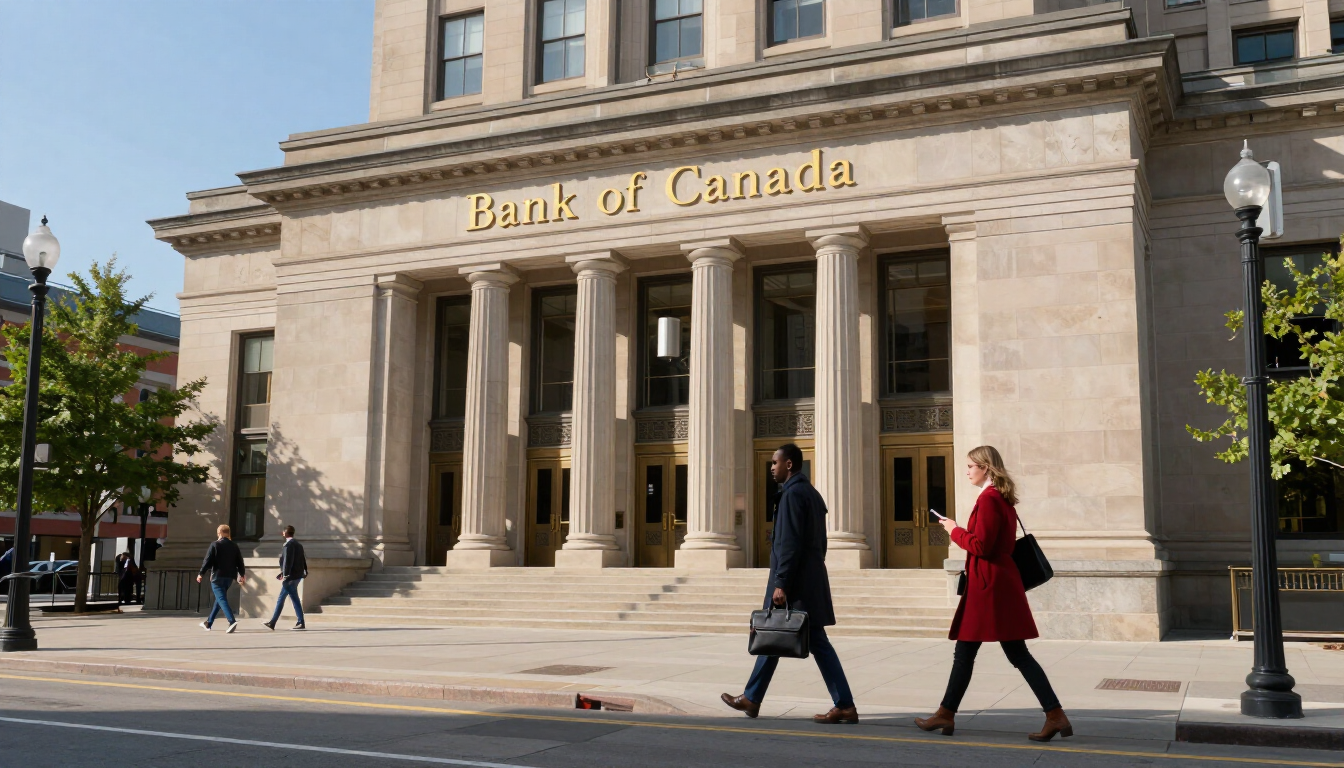
Bank of Canada maintains policy rate at 2¼%. FOR IMMEDIATE RELEASE Media Relations Ottawa, Ontario January 28, 2026 The Bank of Canada today held its target for the overnight rate at 2.25%, with the Bank Rate at 2.5% and the deposit rate at 2.20%. The outlook for the global and Canadian economies is little changed relative to the projection in the October Monetary Policy Report (MPR). However, the outlook is vulnerable to unpredictable US trade policies and geopolitical risks. Economic growth in the United States continues to outpace expectations and is projected to remain solid, driven by AI-related investment and consumer spending. Tariffs are pushing up US inflation, although their effect is expected to fade gradually later this year. In the euro area, growth has been supported by activity in service sectors and will get additional support from fiscal policy. China’s GDP growth is expected to slow gradually, as weakening domestic demand offsets strength in exports. Overall, the Bank expects global growth to average about 3% over the projection horizon. Global financial conditions have remained accommodative overall. Recent weakness in the US dollar has pushed the Canadian dollar above 72 cents, roughly where it had been since the October MPR. Oil prices have been fluctuating in response to geopolitical events and, going forward, are assumed to be slightly below the levels in the October report. US trade restrictions and uncertainty continue to disrupt growth in Canada. After a strong third quarter, GDP growth in the fourth quarter likely stalled. Exports continue to be buffeted by US tariffs, while domestic demand appears to be picking up. Employment has risen in recent months. Still, the unemployment rate remains elevated at 6.8% and relatively few businesses say they plan to hire more workers. Economic growth is projected to be modest in the near term as population growth slows and Canada adjusts to US protectionism. In the projection, consumer spending holds up and business investment strengthens gradually, with fiscal policy providing some support. The Bank projects growth of 1.1% in 2026 and 1.5% in 2027, broadly in line with the October projection. A key source of uncertainty is the upcoming review of the Canada-US-Mexico Agreement. CPI inflation picked up in December to 2.4%, boosted by base-year effects linked to last winter’s GST/HST holiday. Excluding the effect of changes in taxes, inflation has been slowing since September. The Bank’s preferred measures of core inflation have eased from 3% in October to around 2½% in December. Inflation was 2.1% in 2025 and the Bank expects inflation to stay close to the 2% target over the projection period, with trade-related cost pressures offset by excess supply. Monetary policy is focused on keeping inflation close to the 2% target while helping the economy through this period of structural adjustment. Governing Council judges the current policy rate remains appropriate, conditional on the economy evolving broadly in line with the outlook we published today. However, uncertainty is heightened and we are monitoring risks closely. If the outlook changes, we are prepared to respond. The Bank is committed to ensuring that Canadians continue to have confidence in price stability through this period of global upheaval. Information note The next scheduled date for announcing the overnight rate target is March 18, 2026. The Bank’s next MPR will be released on April 29, 2026. Read the January 28th, 2026 Monetary Report
by Ose Ainabe 20 January 2026
Can You Afford That Mortgage? Let’s Talk About Debt Service Ratios One of the biggest factors lenders look at when deciding whether you qualify for a mortgage is something called your debt service ratios. It’s a financial check-up to make sure you can handle the payments—not just for your new home, but for everything else you owe as well. If you’d rather skip the math and have someone walk through this with you, that’s what I’m here for. But if you like to understand how things work behind the scenes, keep reading. We’re going to break down what these ratios are, how to calculate them, and why they matter when it comes to getting approved. What Are Debt Service Ratios? Debt service ratios measure your ability to manage your financial obligations based on your income. There are two key ratios lenders care about: Gross Debt Service (GDS) This looks at the percentage of your income that would go toward housing expenses only. 2. Total Debt Service (TDS) This includes your housing costs plus all other debt payments—car loans, credit cards, student loans, support payments, etc. How to Calculate GDS and TDS Let’s break down the formulas. GDS Formula: (P + I + T + H + Condo Fees*) ÷ Gross Monthly Income Where: P = Principal I = Interest T = Property Taxes H = Heat Condo fees are usually calculated at 50% of the total amount TDS Formula: (GDS + Monthly Debt Payments) ÷ Gross Monthly Income These ratios tell lenders if your budget is already stretched too thin—or if you’ve got room to safely take on a mortgage. How High Is Too High? Most lenders follow maximum thresholds, especially for insured (high-ratio) mortgages. As of now, those limits are typically: GDS: Max 39% TDS: Max 44% Go above those numbers and your application could be declined, regardless of how confident you feel about your ability to manage the payments. Real-World Example Let’s say you’re earning $90,000 a year, or $7,500 a month. You find a home you love, and the monthly housing costs (mortgage payment, property tax, heat) total $1,700/month. GDS = $1,700 ÷ $7,500 = 22.7% You’re well under the 39% cap—so far, so good. Now factor in your other monthly obligations: Car loan: $300 Child support: $500 Credit card/line of credit payments: $700 Total other debt = $1,500/month Now add that to the $1,700 in housing costs: TDS = $3,200 ÷ $7,500 = 42.7% Uh oh. Even though your GDS looks great, your TDS is just over the 42% limit. That could put your mortgage approval at risk—even if you’re paying similar or higher rent now. What Can You Do? In cases like this, small adjustments can make a big difference: Consolidate or restructure your debts to lower monthly payments Reallocate part of your down payment to reduce high-interest debt Add a co-applicant to increase qualifying income Wait and build savings or credit strength before applying This is where working with an experienced mortgage professional pays off. We can look at your entire financial picture and help you make strategic moves to qualify confidently. Don’t Leave It to Chance Everyone’s situation is different, and debt service ratios aren’t something you want to guess at. The earlier you start the conversation, the more time you’ll have to improve your numbers and boost your chances of approval. If you're wondering how much home you can afford—or want help analyzing your own GDS and TDS—let’s connect. I’d be happy to walk through your numbers and help you build a solid mortgage strategy.